📚 Éducation
From Blueprint to Silicon: Help A Group of Students Bring Their ideas to life
0€
recaudados
0
donantes
90
días restantes
📋 Acerca de este proyecto
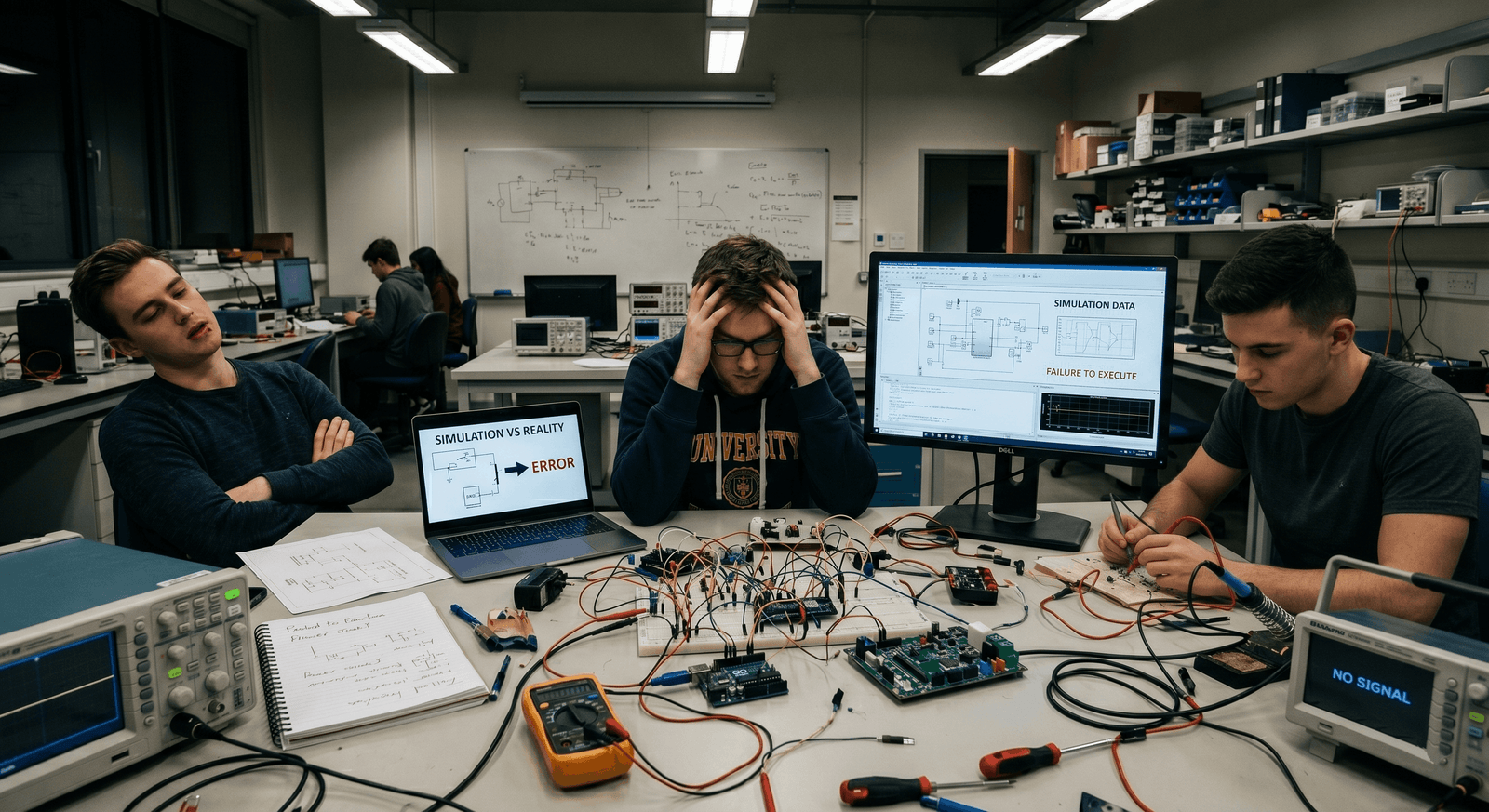
Engineering students spend years learning how to design integrated circuits. They master complex software, simulate millions of transistors, and produce complete, functional chip layouts.
But there is a painful gap.
They never get to see their designs become real.
A real microchip — fabricated in silicon, packaged, tested, and finally held in your hand — costs money to produce. The process of t
But there is a painful gap.
They never get to see their designs become real.
A real microchip — fabricated in silicon, packaged, tested, and finally held in your hand — costs money to produce. The process of t
📖 Historia completa
Engineering students spend years learning how to design integrated circuits. They master complex software, simulate millions of transistors, and produce complete, functional chip layouts.
But there is a painful gap.
They never get to see their designs become real.
A real microchip — fabricated in silicon, packaged, tested, and finally held in your hand — costs money to produce. The process of turning a digital blueprint into a physical component requires access to specialized manufacturing services. Even at reduced academic rates, this transformation from code to silicon can cost between $7,000 and $8,000 USD.
For a dedicated group of students, this amount is impossible without help.
What Does It Mean to Give a Design a "Life"?
The journey from a computer screen to a physical chip involves multiple stages: manufacturing the raw silicon, printing the circuit layers, cutting the wafer, packaging the individual chips, and finally testing them on real equipment. Programs like Multi-Project Wafer (MPW) run help make this possible by allowing multiple designs to share the same manufacturing batch.
But even with shared costs, turning a student's simulation into a tangible object remains expensive.
But there is a painful gap.
They never get to see their designs become real.
A real microchip — fabricated in silicon, packaged, tested, and finally held in your hand — costs money to produce. The process of turning a digital blueprint into a physical component requires access to specialized manufacturing services. Even at reduced academic rates, this transformation from code to silicon can cost between $7,000 and $8,000 USD.
For a dedicated group of students, this amount is impossible without help.
What Does It Mean to Give a Design a "Life"?
The journey from a computer screen to a physical chip involves multiple stages: manufacturing the raw silicon, printing the circuit layers, cutting the wafer, packaging the individual chips, and finally testing them on real equipment. Programs like Multi-Project Wafer (MPW) run help make this possible by allowing multiple designs to share the same manufacturing batch.
But even with shared costs, turning a student's simulation into a tangible object remains expensive.